How do you restore an area that’s being ravaged by recurrent wildfires? And what if that area doesn’t belong to anyone? I visited the village of Verdelhos in the Serra da Estrela Natural Park in central Portugal, where we’ve partnered with GEOTA, to find out.
The Park is a UNESCO-recognized area of exceptional biodiversity, but it’s highly vulnerable to wildfires. As people left the countryside and moved to cities, activities like grazing, farming and forestry became less common. With fewer people tending to rural areas, tree monocultures have gradually replaced the diverse patchwork of forests, pastures and productive land.
Fires spread much more easily through these uniform landscapes and the Park has suffered four major fires in the last 13 years. The most recent was in 2022, when 25% of the Park burned.
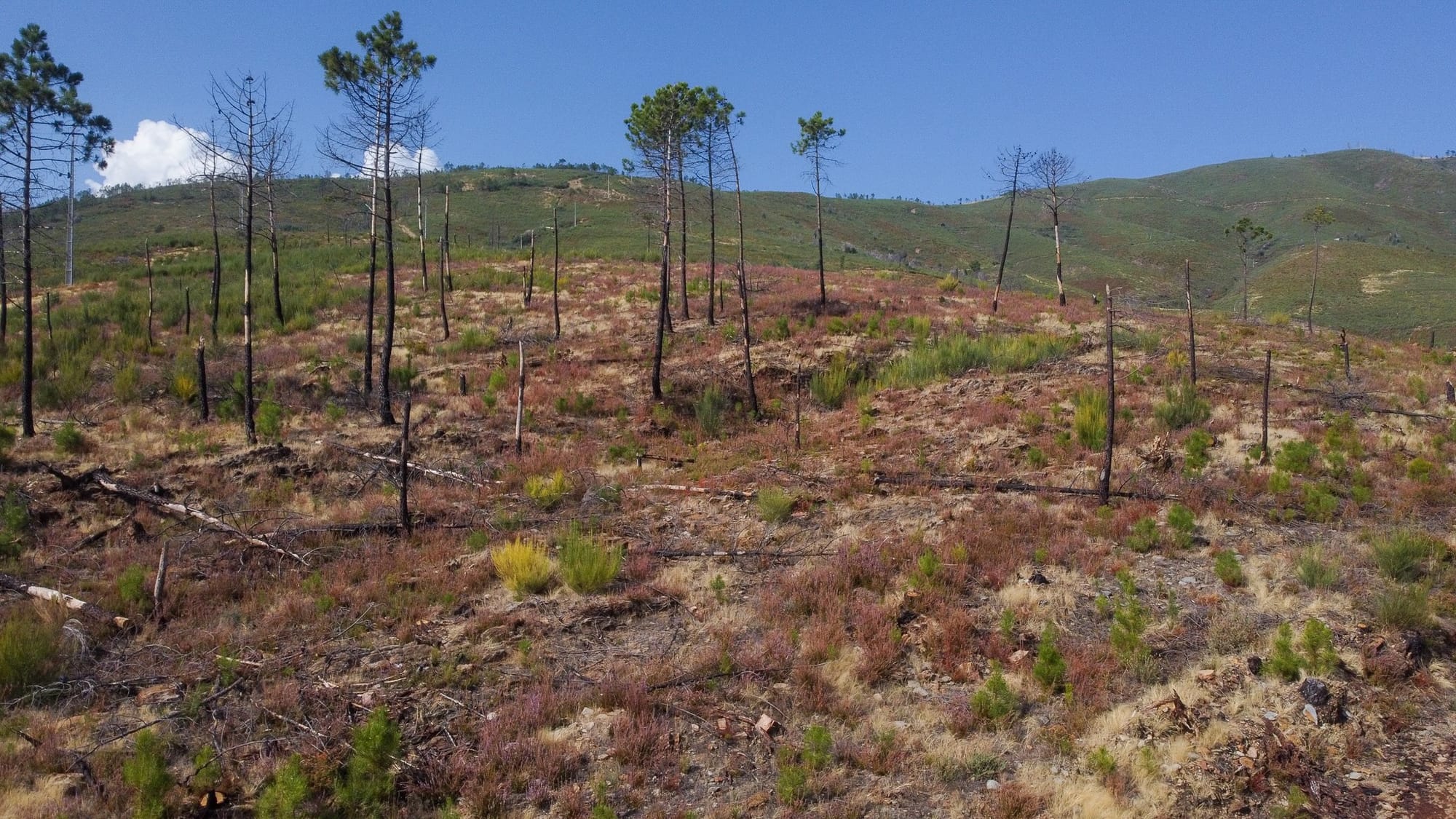
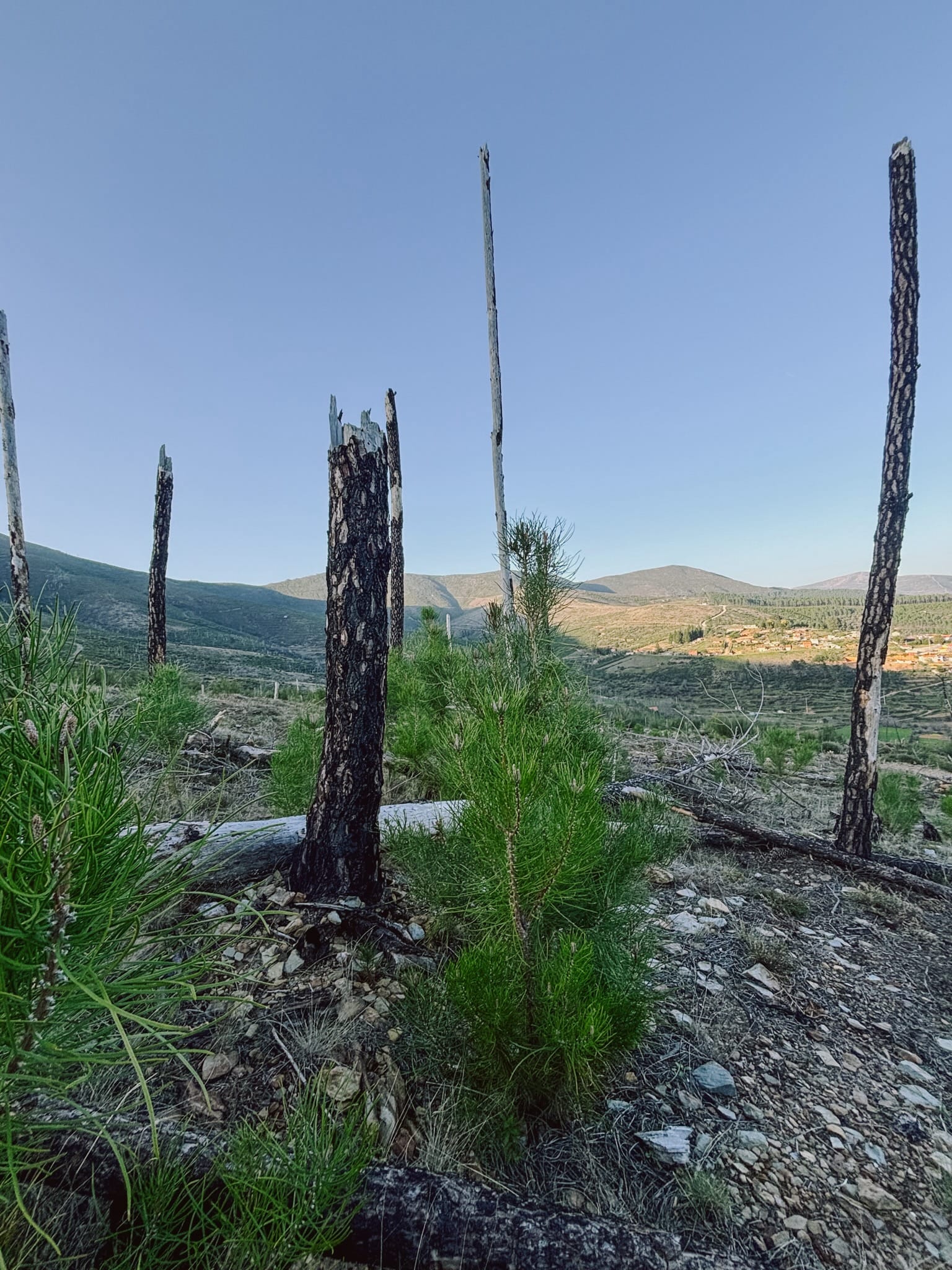
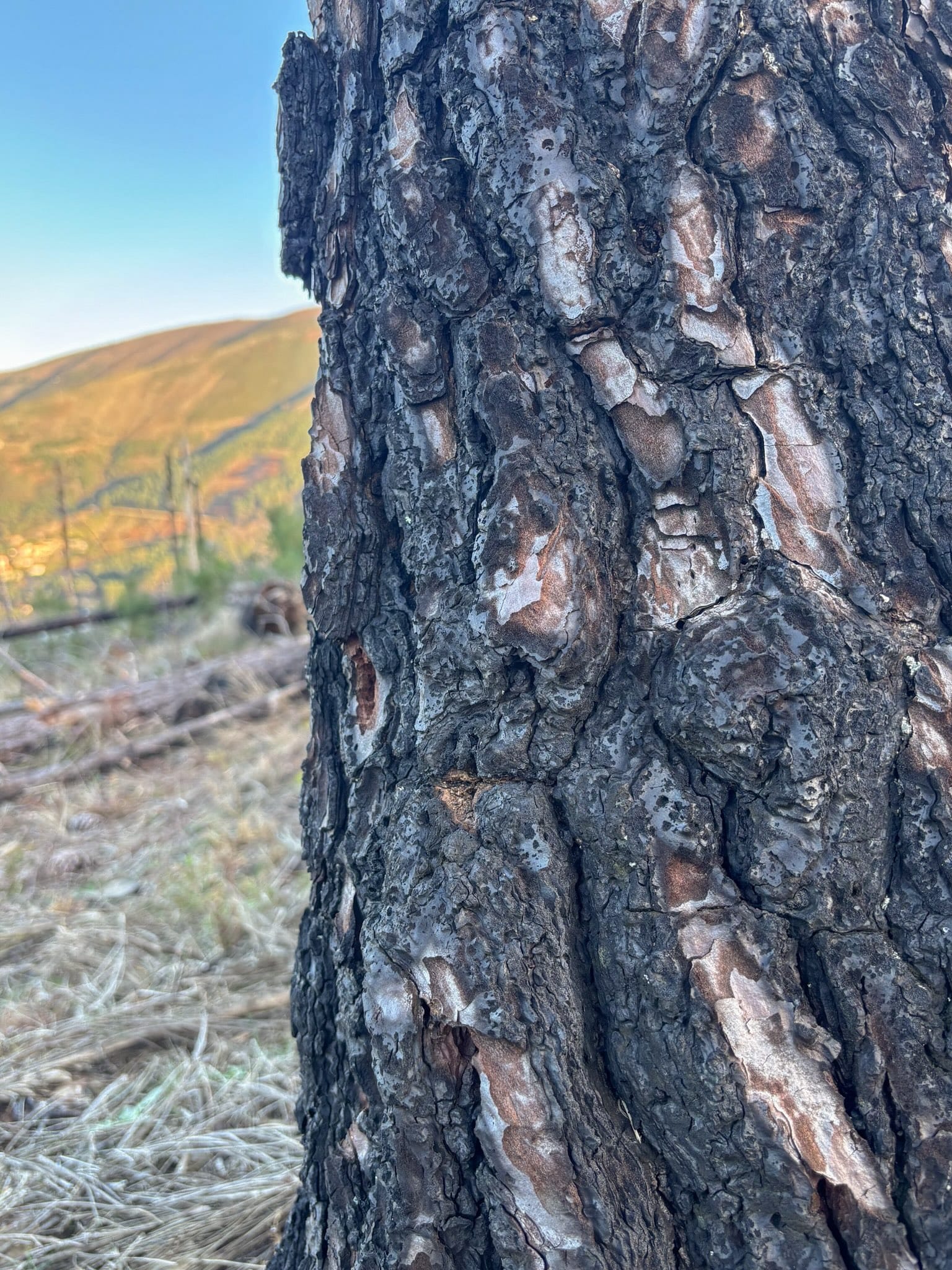
The landscape and trees bear the scars of recurrent wildfires
Restoring a burned area: by planting…and by stepping back
We’re tackling restoration in this area with two different methods: planting and natural regeneration. When we visited the natural regeneration plot, I got to see the aftermath of the last wildfire: charred tree stumps and an emptier landscape… but also a few saplings.
The roots of some trees are still alive underground, so the goal here is to see how the forest can recover on its own after fire — whether surviving trees and shrubs can regrow, and whether new plants can establish naturally from seeds. Sometimes the best way to bring back an ecosystem isn't planting trees, but giving nature the space to recover on its own.
In other plots we’re planting 50,000 native trees, mostly Castanheiros (sweet chestnut) and Pinheiro-bravo (maritime pine). Pine is a ‘pioneer species’, capable of growing in highly degraded soils, stabilizing it and building soil fertility over time. Gradually, it creates the conditions for more demanding native species to get established.
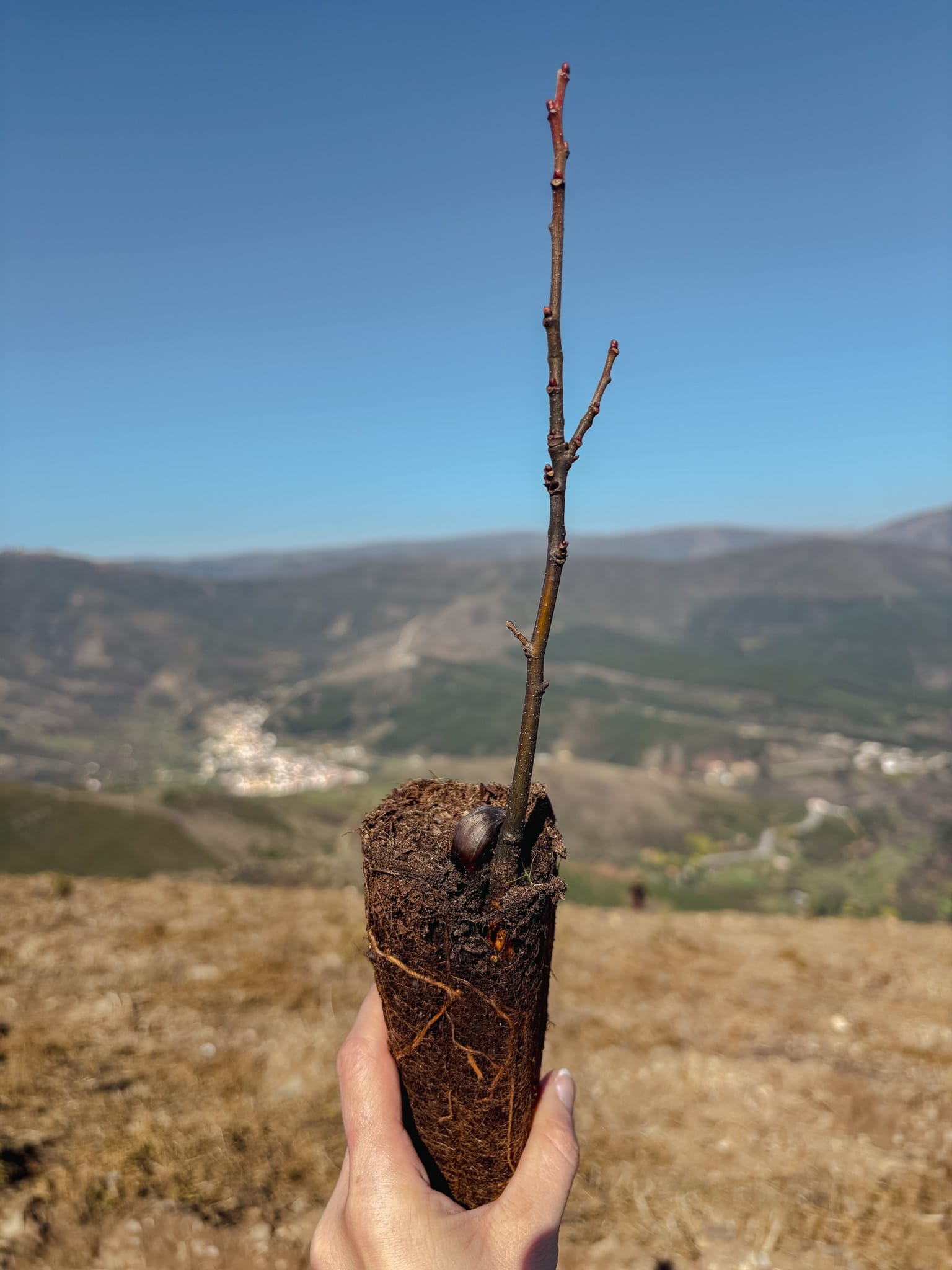
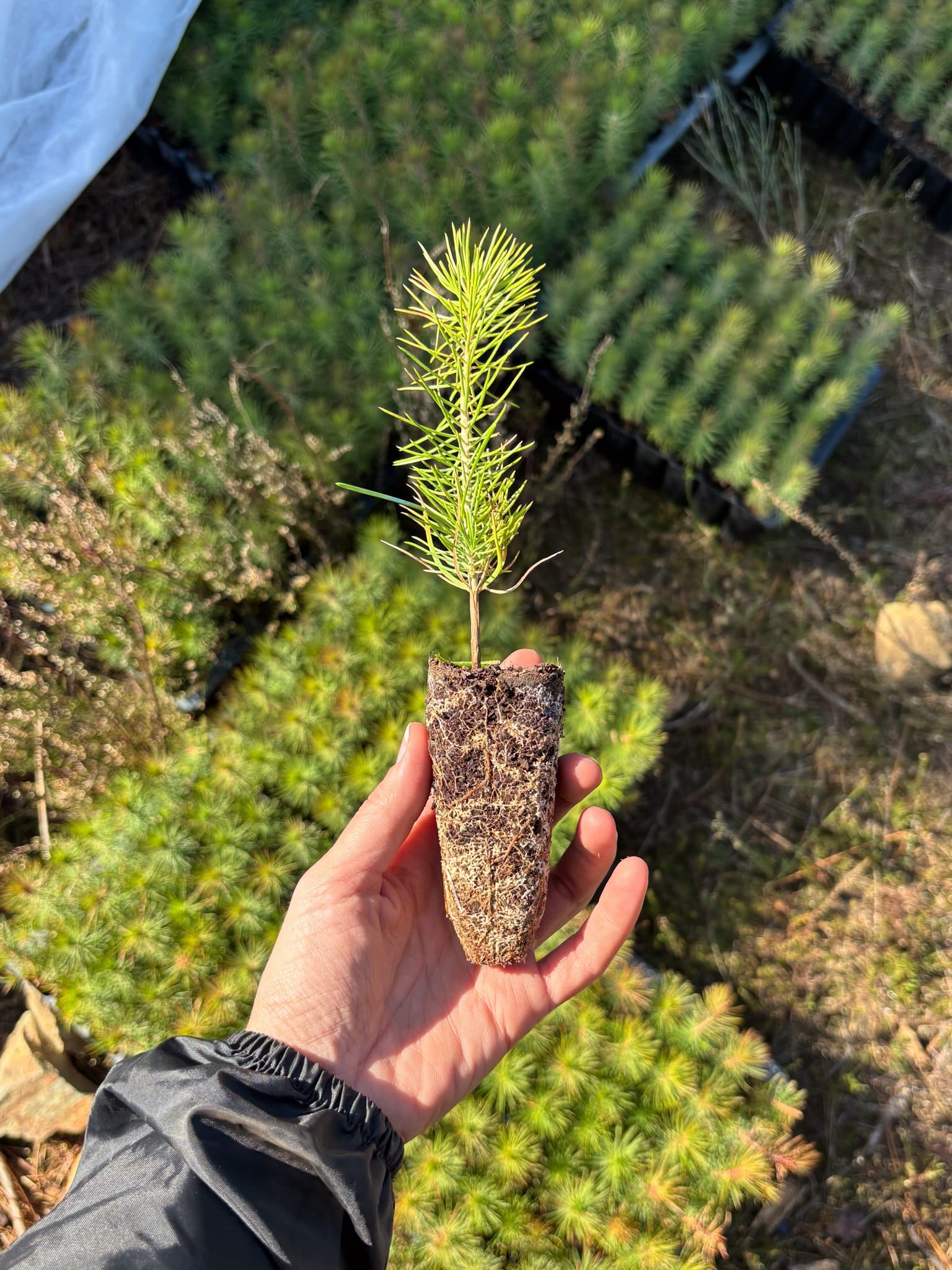
Sweet chestnut and maritime pine seedlings ready to go in the ground
Both pine and chestnut also provide economic value – through pinecone and chestnut harvesting and supporting nature tourism in the area.
Planting’s no walk in the park
I visited in February, during planting season. Our partners were using a tall, red planting tool, designed to make the job easier. (I tried it and can confirm it still takes a lot of strength!)
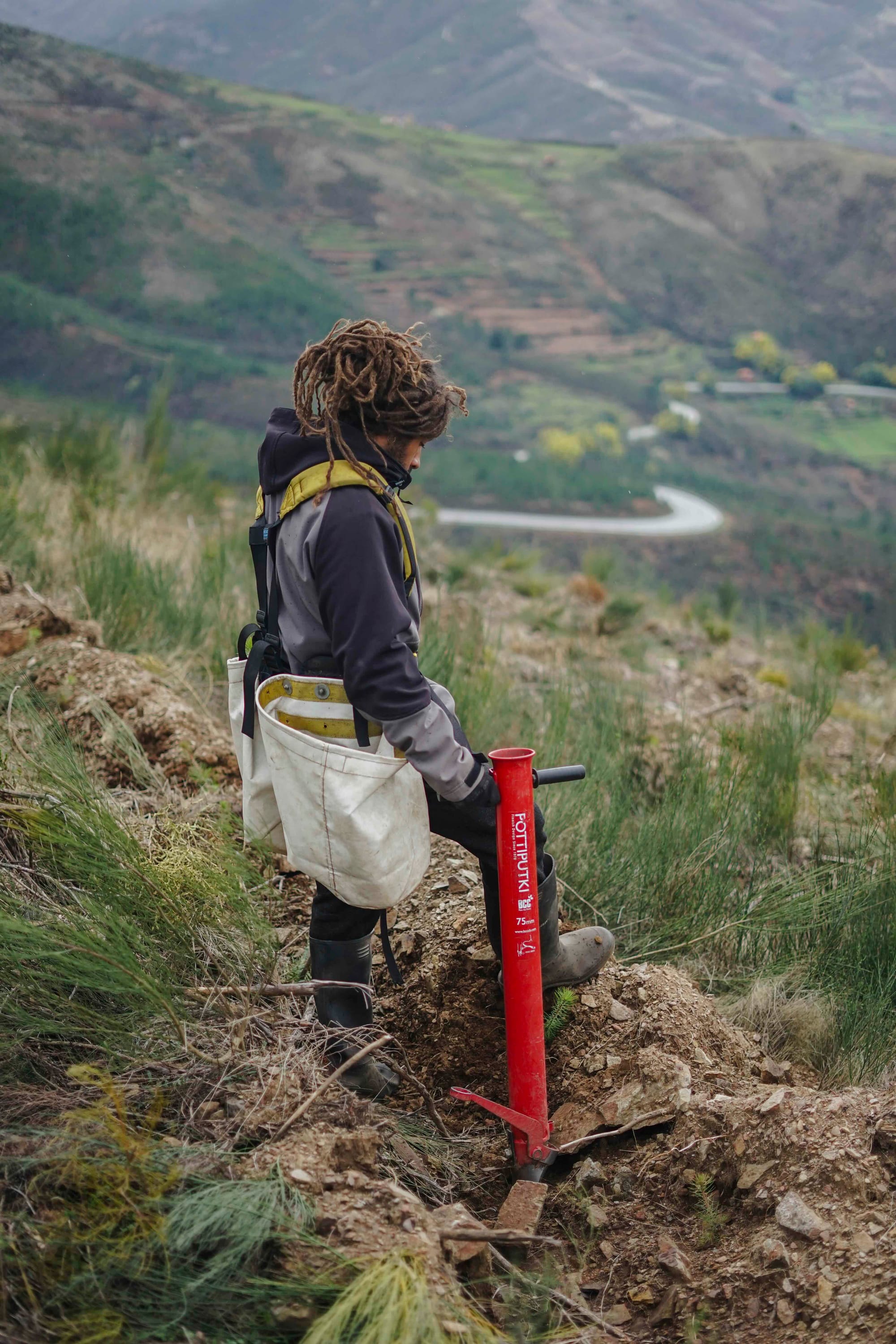
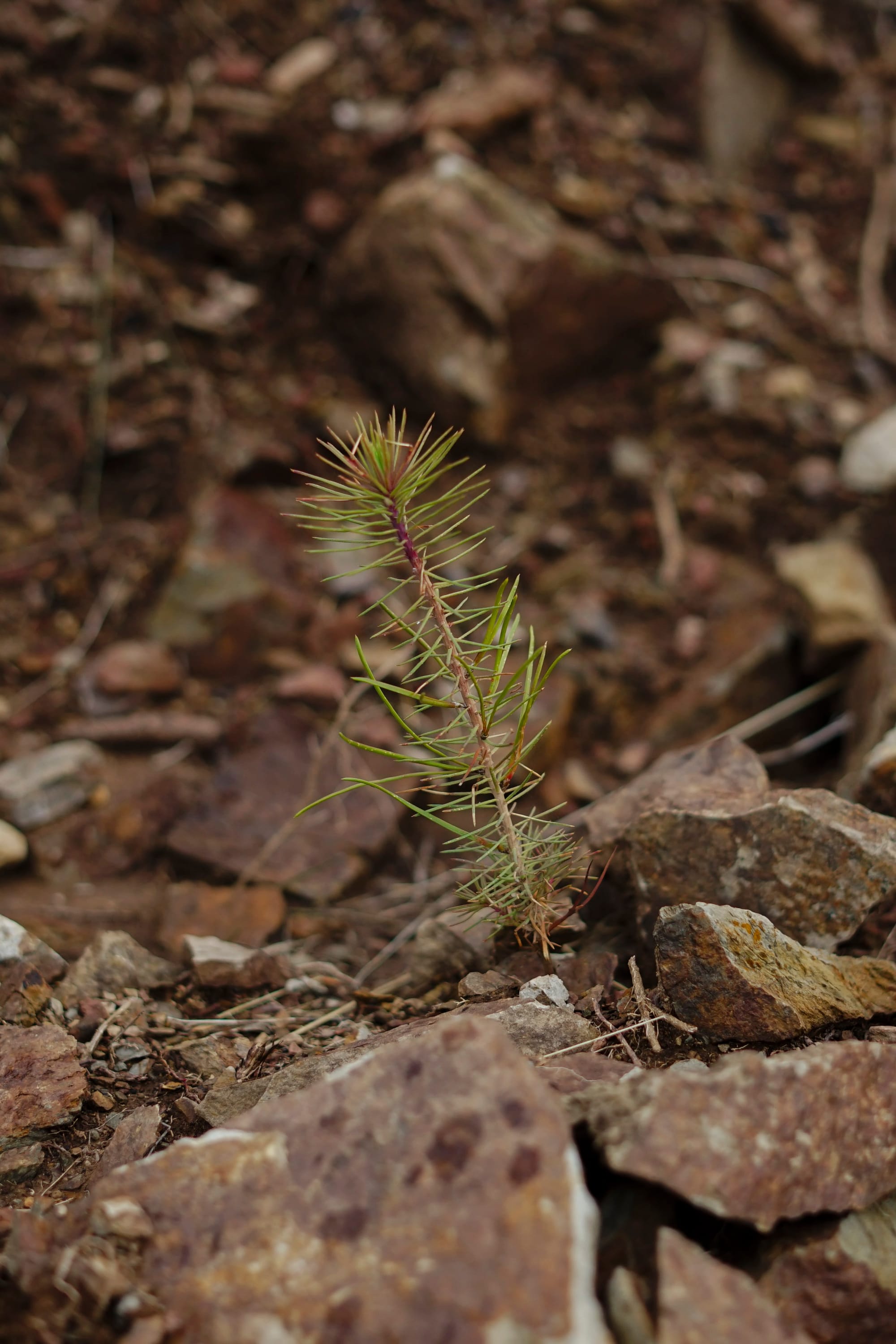
Kaikê, tree planter from GEOTA, feeds native pine seedlings into the planter
The weather extremes add another layer of difficulty. The area swings from frosty winters to scorching summers above 35°C, so every decision – from tree species selection to planting – has to account for both extremes.
Our partners also have to consider climate change. Trees can take decades to grow, so today’s species choices need to cope not just with today's climate, but with what the region will face 40 years from now.
Baldios: lands that belong to no one
The restoration work here is rooted in baldios – an ancient form of community land management. No one person owns the land; instead, it's collectively managed by the people who live there and benefit from it. As David, the president of the baldio, put it: “The land belongs to no one, but serves everyone.”
The community decides together how the landscape is cared for, and profits from the forest benefit everyone, even paying for a community playground and a football field! Most of us are used to thinking about land as either public or private, so seeing things managed this way was fascinating.
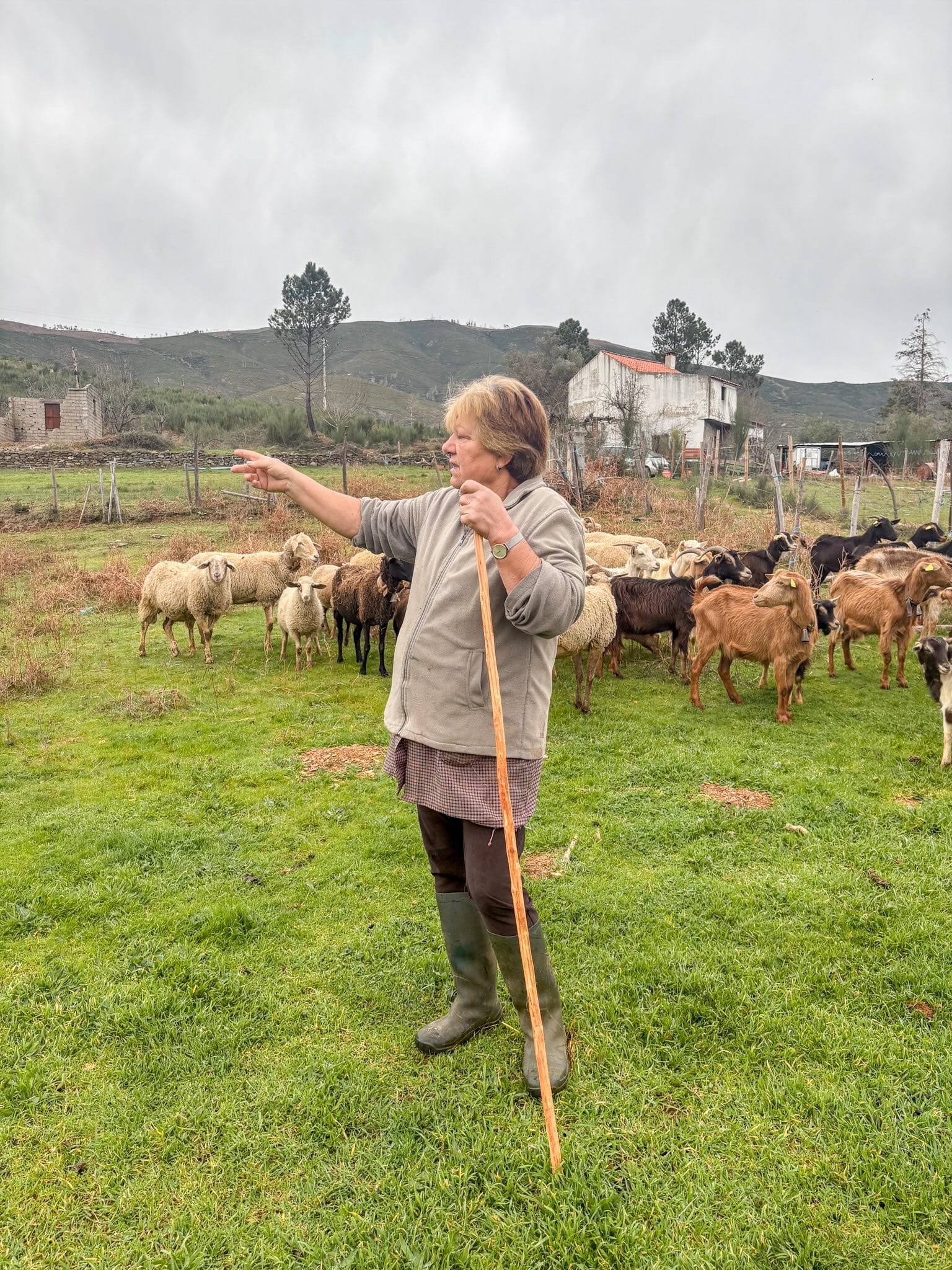
A shepherd with her herd, and chestnut trees: two ways the baldio supports the community
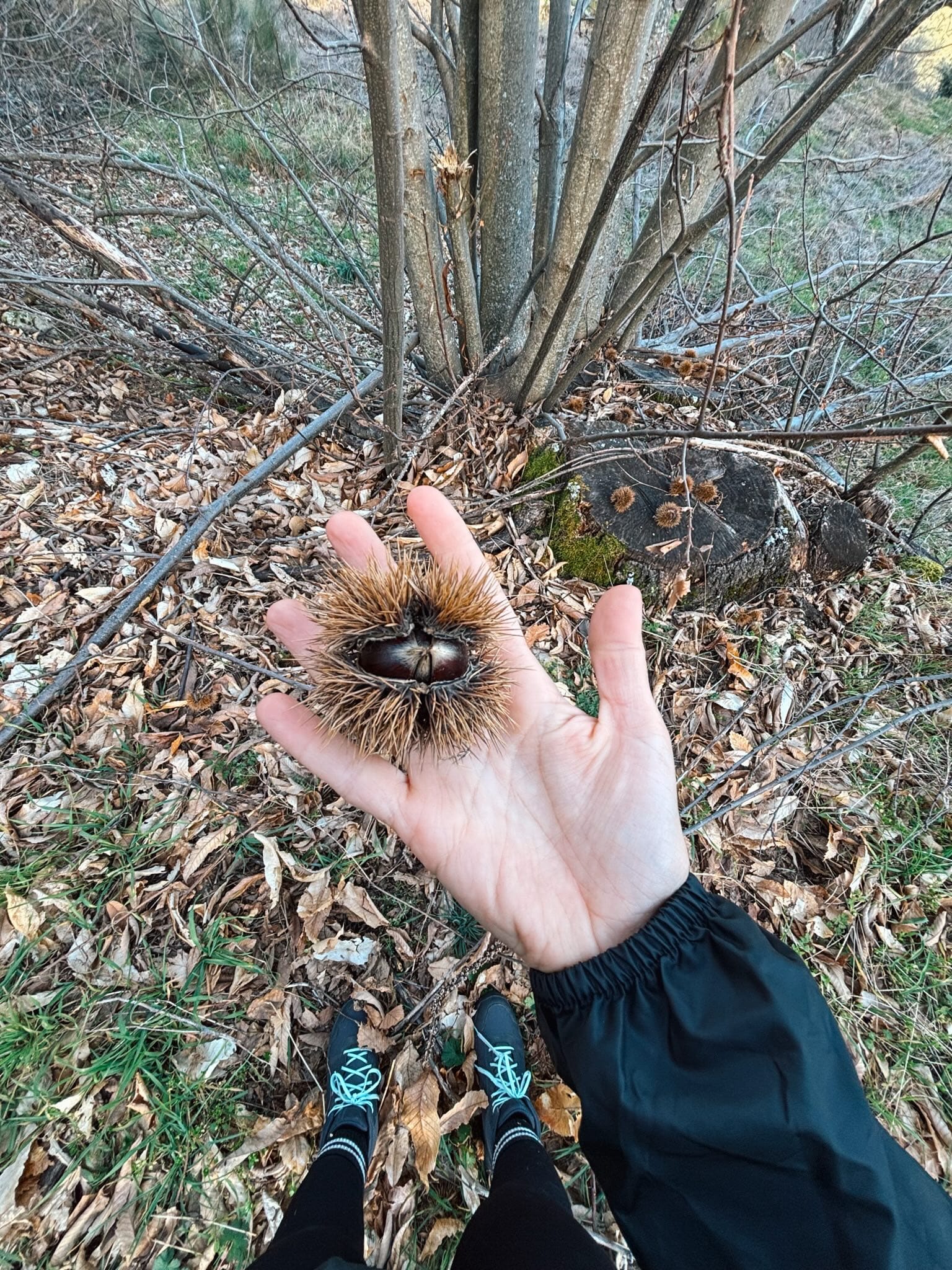
I met community leaders, saw shepherds, held chestnuts in my hands, and visited a playground that was funded by a collectively-run forest. It was a reminder that reforestation isn't just about planting trees. The forests people protect are the ones they have a stake in.
Thanks to the GEOTA team – especially to João, Miguel and Kaikê for showing me around!
